Fatty Liver Severity Calculator
Calculate the Hepatic Steatosis Index (HSI) from ALT, AST, BMI, sex, and diabetes status. Screen for hepatic steatosis severity in NAFLD/MASLD with validated cutoffs and exportable results.
Enter your details — results appear below after you calculate.
Demographics & body metrics
Liver function tests
Typical reference: 10–40 U/L
Typical reference: 7–56 U/L · must be > 0 for ALT/AST ratio
“For me” saves to My Metrics when you’re signed in. “For other” only shows results.
Clinically reviewed methodology. Last reviewed July 2026.
Editorial policy →Source links for formulas and guidance are listed in Sources & Citations below.
How this Fatty Liver Severity calculator works
This tool computes the Hepatic Steatosis Index (HSI)—a validated blood-based score for hepatic steatosis (fatty liver) per Lee et al. Digestive and Liver Disease 2010. HSI < 30 rules out steatosis (~93% sensitivity); HSI > 36 rules it in (~92% specificity); scores between are indeterminate and need liver ultrasound or specialist review.
Enter sex, height and weight (BMI is calculated automatically), type 2 diabetes status, and AST and ALT (U/L) from your latest blood work.
Results include HSI value, full formula component breakdown (8 × ALT/AST, BMI, sex and diabetes adjustments), steatosis category (rule out / indeterminate / rule in), severity grade (unlikely through significant), ALT/AST ratio analysis, individual lab reference status, health score, clinical interpretation, FIB-4/NFS fibrosis screening guidance, and PDF export.
Pair with our FIB-4 Liver Fibrosis Calculator, NAFLD Fibrosis Score (NFS), Fatty Liver Risk, and Metabolic Syndrome Risk calculators for broader metabolic liver context. HSI screens for fat—not fibrosis. This is an educational screening tool—not a diagnosis. Seek hepatology care for high HSI with persistently elevated enzymes. Emergency care for jaundice, vomiting blood, or severe abdominal swelling.
Quick reference: HSI < 30 rules out steatosis · 30 to 36 is indeterminate (needs ultrasound) · HSI > 36 suggests likely steatosis · > 45 suggests more extensive burden. Scroll below for formula breakdown, worked examples, HSI vs FIB-4 vs NFS, steatosis grades S0–S3, clinical screening guidance, diet and lifestyle options, lab variable explanations, common mistakes, and 30 FAQs.
Fatty Liver Severity Calculator – Hepatic Steatosis Index (HSI)
Millions search "fatty liver severity calculator", "hepatic steatosis index", and "HSI calculator" each year. The Hepatic Steatosis Index (HSI) is a validated non-invasive formula that estimates the likelihood and severity of hepatic steatosis (fatty liver) using routine blood tests and body metrics: ALT, AST, BMI, sex, and type 2 diabetes status. Our free calculator applies the Lee et al. Digestive and Liver Disease 2010 formula with published cutoffs, component breakdown, severity grading, and exportable results.
Pair results with our FIB-4 Liver Fibrosis Calculator, NAFLD Fibrosis Score (NFS) Calculator, Fatty Liver Risk Calculator, and Metabolic Syndrome Risk Calculator for comprehensive metabolic liver health assessment.
Why Calculate Hepatic Steatosis Index?
NAFLD/MASLD affects roughly 25–30% of adults worldwide and is the leading cause of chronic liver disease. HSI helps triage who likely has hepatic steatosis versus who can be reassured—with ~93% sensitivity at the low cutoff and ~92% specificity at the high cutoff. Unlike fibrosis scores (FIB-4, NFS), HSI specifically screens for fat accumulation, not scarring.
1What You Enter
Demographics & body metrics
- Age — years (18–100); for clinical context and fibrosis screening
- Gender — male or female (+2 HSI if female)
- Height & weight — BMI calculated automatically
- Type 2 diabetes — yes/no (+2 HSI if yes)
Laboratory values
- AST & ALT — U/L from liver panel
Example (Rule out — steatosis unlikely)
Male, BMI 22, ALT 20, AST 25, no diabetes → ALT/AST = 0.80 → HSI = 8 × 0.80 + 22 = 28.4 — below 30, steatosis unlikely. Continue healthy habits.
Example (Rule in — likely steatosis)
Female, BMI 32, ALT 50, AST 30, diabetes → ALT/AST = 1.667 → HSI = 8 × 1.667 + 32 + 2 + 2 = 49.34 — above 36, likely significant steatosis. Hepatology review and fibrosis screening advised.
Example (Indeterminate zone)
Female, BMI 26, ALT 30, AST 28, no diabetes → ALT/AST = 1.071 → HSI = 8 × 1.071 + 26 + 2 = 34.6 — indeterminate (30 to 36). Request liver ultrasound and metabolic workup.
2HSI Formula & Cutoffs
HSI = 8 × (ALT/AST) + BMI + 2 (if female) + 2 (if type 2 diabetes)
| HSI Range | Category | Severity | Clinical Action |
|---|---|---|---|
| < 30 | Rule out steatosis | Unlikely (S0) | Lifestyle maintenance; annual monitoring |
| 30 to 36 | Indeterminate | Possible (S1) | Liver ultrasound; metabolic workup |
| > 36 | Rule in steatosis | Likely mild (36–40) | 7–10% weight loss; FIB-4/NFS screening |
| > 40 | Rule in steatosis | Likely moderate (40–45) | Intensified lifestyle; hepatology if enzymes persist |
| > 45 | Rule in steatosis | Likely significant (>45) | Hepatology review; imaging quantification |
Published by Lee et al. in a cohort of 10,724 Korean subjects. AUROC 0.812. HSI < 30: sensitivity 93.1% for ruling out NAFLD. HSI > 36: specificity 92.4% for detecting NAFLD.
HSI vs FIB-4 vs NFS vs Fatty Liver Risk — When to Use Each
| Calculator | Screens For | Key Inputs | Best Use |
|---|---|---|---|
| HSI (this tool) | Steatosis (fat) | ALT, AST, BMI, sex, diabetes | First-line steatosis screening with basic labs |
| FIB-4 | Advanced fibrosis (F3–F4) | Age, AST, ALT, platelets | After steatosis confirmed; 4 inputs only |
| NAFLD NFS | Advanced fibrosis (F3–F4) | Age, BMI, diabetes, AST, ALT, platelets, albumin | NAFLD-specific fibrosis staging |
| Fatty Liver Risk | Future NAFLD risk | Lifestyle, waist, diet, alcohol | No blood tests yet; prevention screening |
Clinical pathway: Fatty Liver Risk (no labs) → HSI (steatosis with enzymes) → FIB-4 or NFS (fibrosis staging) → FibroScan (if indeterminate). Steatosis severity and fibrosis stage are independent — always assess both.
Understanding Steatosis Grades (S0–S3)
Histological steatosis is graded by the percentage of hepatocytes containing fat droplets. HSI detects presence of steatosis reliably but cannot precisely grade S2 vs S3 without imaging.
| Grade | Liver Fat % | HSI Correlation | Reversibility |
|---|---|---|---|
| S0 — None | < 5% | HSI < 30 | N/A — maintain health |
| S1 — Mild | 5–33% | HSI 30–40 | Highly reversible with lifestyle |
| S2 — Moderate | 33–66% | HSI 40–45 | Reversible; may need specialist care |
| S3 — Severe | > 66% | HSI > 45 (approximate) | Reversible but higher NASH/fibrosis risk |
Worked HSI Examples
Example (Rule out — steatosis unlikely)
Male, 175 cm, 70 kg (BMI 22.9), ALT 20, AST 25, no diabetes. ALT/AST = 0.80 → HSI = 8 × 0.80 + 22.9 = 29.3 — below 30, steatosis unlikely. Continue healthy habits.
Example (Indeterminate zone)
Female, 162 cm, 72 kg (BMI 27.4), ALT 35, AST 30, no diabetes. ALT/AST = 1.167 → HSI = 33.2 — indeterminate. Request liver ultrasound and metabolic panel.
Example (Rule in — likely steatosis)
Male, 175 cm, 92 kg (BMI 30.0), ALT 48, AST 35, no diabetes. ALT/AST = 1.371 → HSI = 40.97 — likely moderate steatosis. Target 7–10% weight loss; calculate FIB-4.
Example (Rule in — significant burden)
Female, 160 cm, 82 kg (BMI 32.0), ALT 55, AST 32, diabetes yes. ALT/AST = 1.719 → HSI = 49.75 — likely significant steatosis. Hepatology referral and fibrosis screening advised.
Lifestyle Interventions for Fatty Liver
- 7–10% weight loss — most evidence-based intervention for steatosis reversal; even 3–5% improves enzymes
- Mediterranean diet — olive oil, fish, vegetables, whole grains; limit red meat and processed foods
- Limit fructose — sugary drinks and high-fructose corn syrup drive hepatic de novo lipogenesis
- Exercise — 150+ min/week aerobic plus resistance training 2–3× weekly; reduces liver fat independent of weight loss
- Alcohol — limit or avoid; even moderate intake worsens steatosis in MASLD
- Glycemic control — HbA1c target per diabetes guidelines; GLP-1 agonists show emerging liver benefits
India & South Asia Screening Notes
NAFLD prevalence in India exceeds 25% in urban adults, with higher rates in those with type 2 diabetes and metabolic syndrome. Asian Indians develop steatosis at lower BMI ("lean NAFLD") due to central adiposity and insulin resistance—HSI may be indeterminate despite ultrasound steatosis. Use Asian waist cutoffs (≥80 cm women, ≥90 cm men) alongside HSI. Pair with our Waist-to-Height Ratio Calculator and Insulin Resistance Calculator.
Common HSI Mistakes to Avoid
1. Confusing steatosis with fibrosis
High HSI means likely fat in the liver—not scarring. Always screen fibrosis separately with FIB-4 or NFS. A patient can have severe steatosis with no advanced fibrosis.
2. Ignoring indeterminate scores
HSI 30–36 cannot rule in or out steatosis. Request liver ultrasound rather than repeating HSI alone or assuming a healthy liver.
3. Using HSI during heavy alcohol use
Alcohol elevates AST more than ALT, lowering the ALT/AST ratio and artificially reducing HSI. Evaluate alcohol intake with our Alcohol Impact Calculator.
4. Treating low HSI as guaranteed healthy liver
Low HSI excludes significant steatosis but not future risk. Lean patients with central obesity may have discordant HSI and imaging. Continue metabolic monitoring.
5. Including prediabetes as diabetes
The Lee formula adds +2 only for type 2 diabetes, not prediabetes or IFG. Selecting Yes incorrectly raises HSI by 2 points.
When to Seek Emergency Care
- Jaundice (yellow eyes or skin) with high HSI and elevated enzymes
- Vomiting blood or black tarry stools
- Severe abdominal pain or rapidly enlarging abdomen
- Confusion, drowsiness, or personality change (hepatic encephalopathy)
- Call 102 or 108 (India ambulance) or go to the nearest emergency department
Frequently Asked Questions (FAQs)
Related Calculators
You might also be interested in these related health and wellness calculators:
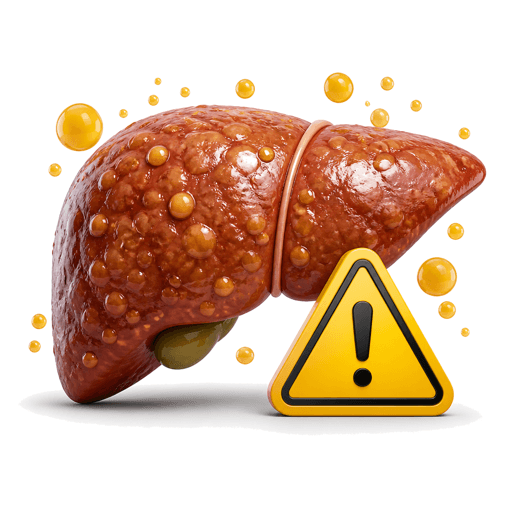
Fatty Liver Risk Calculator
Assess NAFLD/MASLD fatty liver risk from BMI, waist, diabetes, diet, alcohol and lifestyle. Get weight-loss targets, diet tips, exercise guidance, and liver test recommendations.
NAFLD Fibrosis Score (NFS) Calculator
Calculate the NAFLD Fibrosis Score from age, BMI, diabetes, AST, ALT, platelets and albumin. Screen for advanced liver fibrosis (F3–F4) in NAFLD/MASLD with validated cutoffs and PDF export.
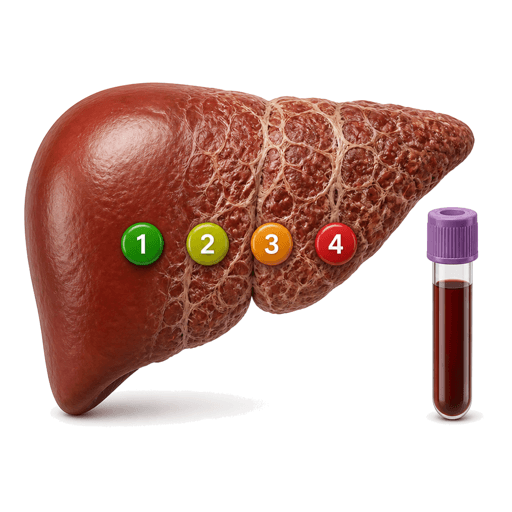
FIB-4 Liver Fibrosis Calculator
Calculate the FIB-4 index from age, AST, ALT and platelet count. Screen for advanced liver fibrosis (F3–F4) in NAFLD, viral hepatitis and chronic liver disease with validated cutoffs and PDF export.
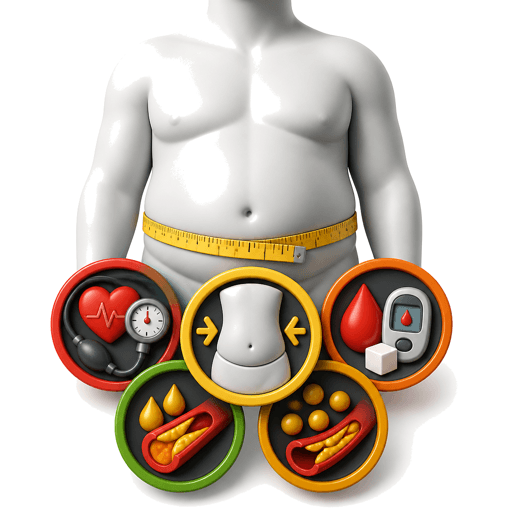
Metabolic Syndrome Risk Calculator
Screen metabolic syndrome with all 5 harmonized criteria—waist, triglycerides, HDL, blood pressure and fasting glucose. Asian waist cutoffs, diet tips, exercise guidance and lab recommendations.
Insulin Resistance (HOMA-IR) Calculator
Calculate HOMA-IR from fasting glucose and fasting insulin to estimate insulin resistance. Get category, HOMA-β, and educational guidance for metabolic health.

Type 2 Diabetes Risk Assessment Calculator
Assess type 2 diabetes risk using the Indian Diabetes Risk Score (IDRS). Enter age, waist, family history, activity, and clinical history. Low to Very High risk with PDF export.
Body Mass Index (BMI) Calculator
Calculate your Body Mass Index (BMI) from height and weight in metric or imperial units. Get WHO categories, healthy weight range, BMI Prime, and PDF export.
Triglyceride/HDL Ratio Calculator
Calculate triglyceride/HDL ratio from fasting lipids for cardiometabolic risk, insulin resistance screening, AHA lipid interpretation, and PDF export.
Calculator Categories
Explore more free tools by health topic. Your calculator's category is highlighted below.
Body Composition
16 calculators
Browse categoryNutrition & Metabolism
31 calculators
Browse categoryFitness & Cardio
13 calculators
Browse categorySleep & Circadian Health
6 calculators
Browse categoryAging & Longevity
6 calculators
Browse categoryHeart & Metabolic Health
23 calculators
Browse categoryMental Wellbeing
4 calculators
Browse categoryWomen's Health
10 calculators
Browse categoryEnvironment & Lifestyle
6 calculators
Browse category