Waist-to-Height Ratio (WHtR) Calculator
Calculate your waist-to-height ratio (WHtR) — waist ÷ height. Get the half-height rule, target waist at WHtR 0.5, sex-specific waist bands, personalized tips, and PDF export in metric or imperial units.
Enter your details — results appear below after you calculate.
Waist & height
Stand straight, measure at belly button after normal exhale
“For me” saves to My Metrics when you’re signed in. “For other” only shows results.
Science-backed methodology. Last reviewed July 2026.
Editorial policy →Source links for formulas and guidance are listed in Sources & Citations below.
How this Waist-to-Height Ratio (WHtR) calculator works
Enter waist circumference at the navel and height in metric (cm) or imperial (ft/in, in). Optionally add sex for waist-centimeter risk bands and age for contextual notes. We compute WHtR (waist ÷ height), the half-height rule (is your waist less than half your height?), and a target waist at WHtR 0.5 for your stature.
Your report includes WHtR category, a visual scale, screening insights, health considerations, contributing factors, reference bands, and personalized recommendations. Export a PDF or share results for clinical visits. Many guidelines suggest WHtR below 0.5 as a simple goal; values at or above 0.5 often warrant lifestyle attention and metabolic screening.
WHtR does not replace BMI or imaging—it adds distribution context BMI can miss. For follow-up, try our Body Mass Index (BMI), Visceral Fat Risk, or Body Fat calculators.
Waist-to-Height Ratio (WHtR) Calculator – Half-Height Rule & Central Fat Risk
Waist-to-height ratio (WHtR) is among the most practical body measurements you can track at home. Research in large cohorts shows WHtR predicts cardiometabolic outcomes at least as well as BMI in many analyses—because it reflects where fat is stored, not just how heavy you are. Our Waist-to-Height Ratio (WHtR) Calculator computes your ratio in metric or imperial units, checks the half-height rule, shows a target waist at WHtR 0.5, optional sex-specific waist bands, screening insights, and lifestyle guidance—with PDF export so you can bring clear numbers to your next appointment.
What Is Waist-to-Height Ratio?
Central obesity—excess fat around the abdomen and organs—is a key driver of insulin resistance, unhealthy cholesterol, fatty liver, and cardiovascular disease. WHtR standardizes waist size against your height so tall and short people share the same screening cutoffs. The memorable public-health goal is simple: keep your waist to less than half your height. Unlike BMI, WHtR does not require a scale—only a tape measure and a height measurement.
1What You Enter
Required measurements
- Unit system: metric (cm) or imperial (ft/in, in)
- Height (standing, without shoes)
- Waist circumference at the navel (belly button)
Optional context
- Gender (male / female) for waist cm risk bands
- Age (contextual notes for 40+ and 65+)
2Formulas We Use
Waist-to-height ratio (WHtR)
WHtR = waist circumference ÷ height
Same unit for both (cm ÷ cm or in ÷ in). Example: waist 85 cm, height 170 cm → WHtR = 85 ÷ 170 = 0.50.
Half-height rule (WHtR 0.5)
Target waist = height × 0.5
When WHtR is below 0.5, waist is less than half your height. We show how many cm or inches to reduce if you are above that goal.
WHtR screening bands
- < 0.40 — low central adiposity
- 0.40 – 0.49 — moderate
- 0.50 – 0.59 — increased risk
- ≥ 0.60 — high risk
Waist circumference bands (cm, optional)
When sex is selected, we compare waist to commonly cited metabolic thresholds (similar to NICE / IDF Europid guidance):
- Men: healthy < 94 cm; increased 94–101 cm; high ≥ 102 cm
- Women: healthy < 80 cm; increased 80–87 cm; high ≥ 88 cm
3What Your Results Include
- WHtR value, category label, and visual scale (approx. 0.35–0.65)
- Half-height rule status (waist below half height or not)
- Target waist at WHtR 0.5 and reduction guidance if above goal
- Optional sex-specific waist cm band
- Screening insights, interpretation, and health considerations
- Contributing factors and personalized recommendations
- WHtR reference table and PDF export / share
WHtR Screening Bands
| WHtR | Classification | Half-height rule |
|---|---|---|
| < 0.40 | Low central adiposity | Below 0.5 ✓ |
| 0.40 – 0.49 | Moderate | Below 0.5 ✓ |
| 0.50 – 0.59 | Increased risk | At or above 0.5 |
| ≥ 0.60 | High risk | Well above 0.5 |
Health Risks Associated with WHtR (Overview)
Population studies associate higher WHtR with greater cardiometabolic burden. Individual risk still depends on genetics, fitness, diet, sleep, and lab results.
| WHtR band | Range | Common associations |
|---|---|---|
| Low | < 0.40 | Lower average central-fat-related risk; still check fitness and labs periodically |
| Moderate | 0.40 – 0.49 | Borderline pattern—watch waist trend; lifestyle optimization often sufficient |
| Increased | 0.50 – 0.59 | Higher rates of prediabetes, hypertension, dyslipidemia, fatty liver in many groups |
| High | ≥ 0.60 | Strong screening signal for visceral obesity; metabolic syndrome and cardiovascular risk often elevated |
WHtR vs BMI – Why Use Both?
| Measure | Uses | Limitation |
|---|---|---|
| BMI | Weight ÷ height² | Misses central fat; muscle raises BMI |
| WHtR | Waist ÷ height | Does not measure total body fat % |
| Together | Home metabolic screening | Add labs & clinician for diagnosis |
Sample WHtR Calculations
Example A (metric)
Height 180 cm, waist 81 cm → WHtR = 81 ÷ 180 = 0.45 (moderate, below half-height goal). Target waist at 0.5 = 90 cm.
Example B (imperial)
5 ft 6 in (66 in), waist 36 in → WHtR = 36 ÷ 66 ≈ 0.55 (increased risk). Target waist ≈ 33 in to reach 0.5.
Benefits of Using This Waist-to-Height Ratio (WHtR) Calculator
- Stronger central-fat screen – Often flags risk when BMI looks normal.
- No scale required – Tape measure and height only.
- Clear goal – Half-height rule and target waist at 0.5.
- Actionable gap – See approximate waist reduction for your height.
- Track trends – Recalculate every 4–8 weeks during lifestyle change.
- Holistic follow-up – Link to BMI, Visceral Fat, Body Fat, Calorie, and Insulin Resistance tools on this site.
How to Use This Waist-to-Height Ratio (WHtR) Calculator
- Choose units – Metric or imperial to match your tape measure.
- Measure waist at the navel – Standing, after normal exhale; tape parallel to floor.
- Measure height – Without shoes, same visit as waist.
- Add optional sex – Enables waist cm risk bands.
- Calculate – Review WHtR, half-height status, target waist, insights, and recommendations.
- Export or share – Save PDF for appointments.
- Follow up – Pair with BMI and labs; see a clinician if WHtR is high or rising unintentionally.
Strategies to Improve WHtR (Overview)
If WHtR is below 0.5
- Maintain activity, sleep, and protein intake
- Recheck waist periodically—central fat can rise with age
- Still monitor blood pressure and glucose if family history is strong
If WHtR is 0.5 or above
- Target sustainable waist reduction toward half your height
- 150+ min/week activity plus resistance training 2–3×/week
- Limit sugary drinks and ultra-processed foods; prioritize fiber
- Consider 5–10% weight loss when clinically appropriate
- Discuss metabolic labs and medical options with your clinician
Understanding Your WHtR Category
Low (< 0.40)
Relatively low central adiposity on screening scales. Maintain habits and periodic waist checks.
Moderate (0.40–0.49)
Often still below the 0.5 half-height goal. Watch trends; optimize nutrition and movement if waist is rising.
Increased (0.50–0.59)
Waist at or above half height. Lifestyle changes and metabolic screening often recommended.
High (≥ 0.60)
Strong central obesity signal. Work with your healthcare team on comprehensive risk reduction.
Factors That Raise WHtR
| Factor | Effect on waist | Practical approaches |
|---|---|---|
| Calorie surplus & refined carbs | Preferential abdominal fat gain | Whole foods, fiber, limit sugary drinks |
| Inactivity | Less fat oxidation; waist expands | Daily walking + resistance training |
| Poor sleep & stress | Cortisol and appetite changes | 7–9 h sleep; stress management |
| Age & genetics | Waist often rises after 40 | Earlier screening; proactive habits |
When WHtR May Mislead
- Wrong waist site – Measuring at the narrowest point instead of the navel changes the ratio.
- Bloating – Meal timing, constipation, or cycle-related bloating can temporarily enlarge waist.
- Pregnancy – Waist grows for fetal development—do not apply adult WHtR goals.
- Ascites or large tumors – Abdominal distension is not adiposity.
- Very muscular cores – Rare at navel level but possible in some athletes—use body composition if unsure.
Common WHtR Measurement Mistakes
1. Sucking in your stomach
Artificially lowers waist and WHtR. Measure after a normal exhale with relaxed abdomen.
2. Mixing units on the ratio
WHtR requires waist and height in the same unit. Our calculator handles conversions for bands; always enter consistent units.
3. Comparing to BMI alone
Normal BMI does not rule out high WHtR. Check both when screening metabolic health at home.
4. Daily obsession with the tape
Waist fluctuates day to day. Monthly or bi-monthly checks show real trends better than daily measurements.
5. Treating WHtR as a diagnosis
WHtR screens risk—it does not measure visceral fat volume. Imaging and labs confirm metabolic disease when needed.
The Science Behind WHtR
Researchers including Margaret Ashwell have published extensively on waist-to-height ratio, showing consistent associations with cardiometabolic outcomes across ethnic groups. Meta-analyses suggest WHtR may outperform BMI and waist circumference alone in some comparisons because height normalizes waist for body size. Organizations promoting “waist less than half height” aim to simplify prevention messaging for adults worldwide. Clinical care still uses full metabolic syndrome criteria—waist plus blood pressure, glucose, triglycerides, and HDL—alongside imaging when visceral fat volume must be quantified.
WHtR & Waist Reference (Educational)
| Measure | Men | Women |
|---|---|---|
| WHtR (all adults) | Goal often < 0.5; ≥ 0.5 increased concern | |
| Waist (cm) | < 94 healthy; ≥ 102 high | < 80 healthy; ≥ 88 high |
Related Tools on This Site
WHtR pairs well with our Body Mass Index (BMI) Calculator, Visceral Fat Risk, Body Fat Calculator, Insulin Resistance (HOMA-IR), and Calorie Calculator for a fuller metabolic health picture.
Frequently Asked Questions (FAQs)
Related Calculators
You might also be interested in these related health and wellness calculators:
Calorie Calculator
Estimate your daily calorie needs based on your age, gender, weight, height, and activity level to support weight loss, maintenance, or muscle gain goals.
Body Fat Percentage Calculator
Calculate your body fat to understand your fitness level and monitor changes over time more accurately than just weighing yourself.

Insulin Resistance (HOMA-IR) Calculator
Calculate HOMA-IR from fasting glucose and fasting insulin to estimate insulin resistance. Get category, HOMA-β, and educational guidance for metabolic health.

Visceral Fat Risk Calculator
Estimate visceral (abdominal) fat risk using waist-to-height ratio, waist circumference, BMI, and lifestyle. Get WHtR bands, health score, and metabolic guidance.
Body Mass Index (BMI) Calculator
Calculate your Body Mass Index (BMI) from height and weight in metric or imperial units. Get WHO categories, healthy weight range, BMI Prime, and PDF export.
Child BMI Calculator
Calculate BMI-for-age percentile for children and teens (ages 2–19) using CDC growth charts. Get weight-status category, healthy range, and PDF export.

Ideal Body Weight Calculator
Calculate ideal weight for your height using Devine, Robinson, Miller, and Hamwi formulas. See average, ideal weight range, frame-size adjustment, and current-weight comparison.
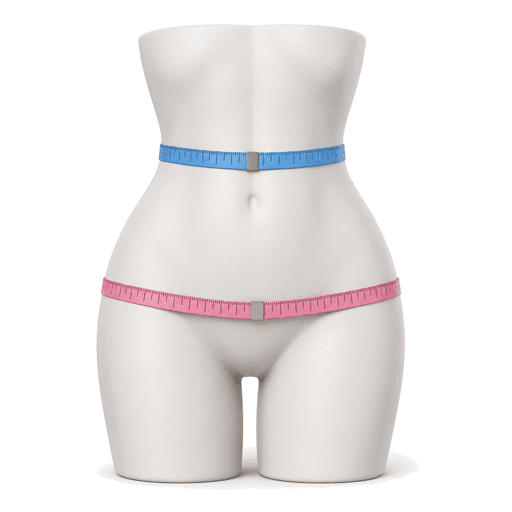
Waist-to-Hip Ratio (WHR) Health Risk Calculator
Calculate waist-to-hip ratio (WHR) from waist and hip measurements. Apple vs pear body shape, WHO health risk levels, and cardiovascular risk interpretation.
Calculator Categories
Explore more free tools by health topic. Your calculator's category is highlighted below.
Body Composition
16 calculators
Browse categoryNutrition & Metabolism
31 calculators
Browse categoryFitness & Cardio
13 calculators
Browse categorySleep & Circadian Health
6 calculators
Browse categoryAging & Longevity
6 calculators
Browse categoryHeart & Metabolic Health
23 calculators
Browse categoryMental Wellbeing
4 calculators
Browse categoryWomen's Health
10 calculators
Browse categoryEnvironment & Lifestyle
6 calculators
Browse category