FIB-4 Liver Fibrosis Calculator
Calculate the FIB-4 index from age, AST, ALT, and platelet count. Screen for advanced liver fibrosis (F3–F4) in NAFLD, viral hepatitis, and chronic liver disease with validated cutoffs and exportable results.
Enter your details — results appear below after you calculate.
Demographics
Age is part of the FIB-4 formula — scores naturally rise after 65
Liver function & blood tests
Typical reference: 10–40 U/L
Typical reference: 7–56 U/L · must be > 0 for √ALT
Typical reference: 150–400 ×10⁹/L
“For me” saves to My Metrics when you’re signed in. “For other” only shows results.
Clinically reviewed methodology. Last reviewed July 2026.
Editorial policy →Source links for formulas and guidance are listed in Sources & Citations below.
How this FIB-4 Liver Fibrosis calculator works
This tool computes the FIB-4 index—a validated blood-based score for advanced liver fibrosis (F3–F4) per Sterling et al. Hepatology 2006. FIB-4 < 1.30 rules out advanced fibrosis (~90% NPV); FIB-4 > 2.67 rules it in (~65–80% PPV); scores between are indeterminate and need FibroScan, NFS comparison, or specialist review.
Enter age (years), AST and ALT (U/L), and platelet count (×10⁹/L or ×10³/µL) from your latest blood work. Only four values needed—no BMI, diabetes, or albumin required.
Results include FIB-4 value, formula component breakdown (√ALT, numerator, denominator), fibrosis category (rule out / indeterminate / rule in), AST/ALT ratio analysis, individual lab reference status, age-adjusted note for adults ≥65, health score, clinical interpretation, FibroScan referral guidance, and PDF export.
Pair with our NAFLD Fibrosis Score (NFS), Fatty Liver Risk, Metabolic Syndrome Risk, and Diabetes Risk calculators for broader metabolic liver context. This is an educational screening tool—not a diagnosis. Seek hepatology care for high or indeterminate FIB-4. Emergency care for jaundice, vomiting blood, or severe abdominal swelling.
Quick reference: FIB-4 < 1.30 rules out advanced fibrosis · 1.30 to 2.67 is indeterminate (needs FibroScan) · FIB-4 > 2.67 suggests F3–F4 fibrosis · Age ≥65: rule-in cutoff > 2.0 may apply. Scroll below for formula breakdown, worked examples, FIB-4 vs NFS, FibroScan cutoffs, clinical screening guidance, diet and treatment options, lab variable explanations, common mistakes, and 30 FAQs.
FIB-4 Liver Fibrosis Calculator – Advanced Fibrosis Screening
Millions search "FIB-4 calculator", "FIB-4 index", and "liver fibrosis score" each year. The FIB-4 index is a validated non-invasive formula that estimates the likelihood of advanced liver fibrosis (bridging fibrosis F3 or cirrhosis F4) using only four routine blood values: age, AST, ALT, and platelet count. No biopsy required for initial screening. Our free calculator applies the Sterling et al. Hepatology 2006 formula with published cutoffs, driver analysis, clinical interpretation, and exportable results.
Pair results with our NAFLD Fibrosis Score (NFS) Calculator, Fatty Liver Risk Calculator, Metabolic Syndrome Risk Calculator, and Diabetes Risk Calculator for comprehensive metabolic liver health assessment.
Why Calculate the FIB-4 Index?
Chronic liver disease—from NAFLD/MASLD to viral hepatitis—can progress silently to advanced fibrosis and cirrhosis. FIB-4 helps triage who needs urgent hepatology referral versus who can continue lifestyle management, with ~90% negative predictive value at the low cutoff and ~65–80% positive predictive value at the high cutoff depending on population.
1What You Enter
Demographics
- Age — years (18–100); part of the FIB-4 numerator
Laboratory values
- AST & ALT — U/L from liver panel
- Platelet count — ×10⁹/L or ×10³/µL
Example (Rule out — low fibrosis risk)
Age 42, AST 32, ALT 45, platelets 250 → FIB-4 = (42 × 32) ÷ (250 × √45) = 0.801 — below 1.30, advanced fibrosis unlikely. Continue lifestyle optimization.
Example (Rule in — high fibrosis risk)
Age 62, AST 78, ALT 52, platelets 145 → FIB-4 = (62 × 78) ÷ (145 × √52) = 4.625 — above 2.67, high probability of advanced fibrosis. Hepatology referral advised.
Example (Indeterminate zone)
Age 55, AST 50, ALT 40, platelets 200 → FIB-4 = (55 × 50) ÷ (200 × √40) = 2.174 — indeterminate (1.30 to 2.67). Cannot rule out or confirm advanced fibrosis; request FibroScan, NFS comparison, and hepatology review.
2FIB-4 Formula & Cutoffs
FIB-4 = (age × AST) ÷ (platelets × √ALT)
Platelets in ×10⁹/L (same numeric value as ×10³/µL). AST and ALT in U/L. Age in years.
| FIB-4 range | Interpretation | Action |
|---|---|---|
| < 1.30 | Low probability of advanced fibrosis | Lifestyle care; routine monitoring |
| 1.30 to 2.67 | Indeterminate | FibroScan / NFS / hepatology referral |
| > 2.67 | High probability of advanced fibrosis | Urgent specialist evaluation |
Age ≥65: FIB-4 naturally rises with age. In older adults, a rule-in cutoff of > 2.0 (instead of 2.67) is often used to reduce false positives—discuss with your hepatologist.
3Understanding Liver Fibrosis Stages
| Stage | Description | FIB-4 relevance |
|---|---|---|
| F0 | No fibrosis; steatosis only | FIB-4 usually < 1.30 |
| F1 | Mild fibrosis | Often low FIB-4; may overlap indeterminate |
| F2 | Moderate fibrosis | Indeterminate zone common |
| F3 | Bridging fibrosis | FIB-4 often > 2.67 |
| F4 | Cirrhosis | High FIB-4; confirm with elastography |
FIB-4 vs Other Fibrosis Tests
| Test | Inputs | Best use |
|---|---|---|
| FIB-4 (this calculator) | Age, AST, ALT, platelets | First-line screening; only 4 routine labs needed |
| NAFLD Fibrosis Score (NFS) | Age, BMI, diabetes, AST, ALT, platelets, albumin | NAFLD-specific; adds metabolic variables |
| FibroScan | Ultrasound elastography (kPa) | Gold-standard non-invasive staging when FIB-4 indeterminate |
| Liver biopsy | Histology | Definitive diagnosis when non-invasive tests discordant |
Treatment & Lifestyle When FIB-4 Is Elevated
- 7–10% weight loss — most effective intervention for early MASLD; reduces liver fat and can lower FIB-4 over 6–12 months
- Mediterranean diet — limits fructose, refined carbs, and saturated fat; emphasizes olive oil, fish, vegetables
- 150+ min/week exercise — aerobic activity reduces hepatic steatosis independent of weight loss
- Glycemic control — optimize HbA1c in diabetes; GLP-1 agonists show fibrosis benefits in trials
- Avoid alcohol — even moderate intake worsens liver disease and elevates AST
- Specialist therapies — resmetirom for F2–F3 MASH; hepatology-guided only
4How FIB-4 Is Calculated — Step by Step
Full formula
FIB-4 = (age × AST) ÷ (platelets × √ALT)
Age in years. AST and ALT in U/L. Platelets in ×10⁹/L (same numeric value as ×10³/µL). ALT must be > 0 for the square root.
What each variable contributes
| Variable | Role in formula | Effect on FIB-4 |
|---|---|---|
| Age (years) | Numerator (× AST) | Higher age raises FIB-4 — strongest in ≥65 |
| AST (U/L) | Numerator (× age) | Higher AST raises FIB-4 |
| Platelets (×10⁹/L) | Denominator | Lower platelets raise FIB-4 substantially |
| ALT (U/L) | Denominator (√ALT) | Lower ALT raises FIB-4 (smaller denominator) |
Worked calculation (Indeterminate)
Age 55, AST 50, ALT 40, platelets 200 → Numerator = 55 × 50 = 2,750 → √ALT = √40 = 6.3246 → Denominator = 200 × 6.3246 = 1,264.91 → FIB-4 = 2,750 ÷ 1,264.91 = 2.174 (indeterminate). Compare with NFS if BMI, diabetes, and albumin are available.
FIB-4 Risk Categories — Rule Out, Indeterminate & Rule In
| Category | FIB-4 cutoff | NPV / PPV | Typical fibrosis stage | Recommended action |
|---|---|---|---|---|
| Rule out | < 1.30 | NPV ~90% | F0–F2 (no/mild/moderate fibrosis) | Lifestyle care; annual LFTs + CBC |
| Indeterminate | 1.30 to 2.67 | Cannot exclude F3–F4 | F1–F3 possible (~20–30% of patients) | FibroScan; NFS; hepatology referral |
| Rule in | > 2.67 (> 2.0 if age ≥65) | PPV ~65–80% | F3–F4 (bridging fibrosis/cirrhosis) | Urgent specialist evaluation |
FIB-4 was originally validated in HCV cohorts (Sterling et al. 2006) and subsequently validated in NAFLD, HBV, and mixed liver disease populations. It performs best at the extremes—indeterminate scores need elastography or NFS for concordant staging.
Understanding NAFLD, MASLD & NASH — Disease Progression
NAFLD (non-alcoholic fatty liver disease) is now often termed MASLD (metabolic dysfunction-associated steatotic liver disease). Simple steatosis is fat accumulation without significant inflammation—often reversible. NASH/MASH (steatohepatitis) adds inflammation and hepatocyte injury. Untreated, NASH can progress through fibrosis stages to cirrhosis and hepatocellular carcinoma. FIB-4 screens for advanced fibrosis (F3–F4) across NAFLD, viral hepatitis, and chronic liver disease—not for diagnosing steatosis itself.
| Stage | What happens | Reversible? | FIB-4 role |
|---|---|---|---|
| Steatosis (F0) | Fat in liver cells; enzymes may be normal | Yes — lifestyle change | Usually FIB-4 < 1.30 |
| NASH/MASH inflammation | Fat + inflammation; ALT/AST often elevated | Often — with 7–10% weight loss | Variable FIB-4 |
| Fibrosis F1–F2 | Early scar tissue in liver | Partially reversible | Low or indeterminate FIB-4 |
| Bridging fibrosis (F3) | Extensive scarring between portal areas | Limited — specialist care | Often FIB-4 > 2.67 |
| Cirrhosis (F4) | End-stage scarring; impaired liver function | Not reversible — prevent progression | High FIB-4; HCC surveillance needed |
Understanding Each FIB-4 Lab Variable
AST & ALT
AST sits in the FIB-4 numerator (age × AST), so elevated AST directly raises the score. ALT is in the denominator as √ALT—a lower ALT mathematically increases FIB-4. In simple steatosis, ALT often exceeds AST; as fibrosis advances, AST/ALT ratio ≥ 1.0 becomes a fibrosis signal even though FIB-4 uses them separately.
- Typical AST: 10–40 U/L
- Typical ALT: 7–56 U/L (men), 7–35 (women)
- Muscle injury, alcohol, and statins also raise AST
Platelet count
Platelets are in the FIB-4 denominator—lower counts substantially raise the score. In advanced liver disease, portal hypertension causes splenic sequestration and thrombocytopenia. Low platelets may signal serious liver disease even when other labs look modestly abnormal.
- Normal: 150–400 ×10⁹/L
- <150 ×10⁹/L: thrombocytopenia — evaluate for fibrosis
- Enter as ×10⁹/L or ×10³/µL (same number)
Age
Age is multiplied by AST in the numerator, making FIB-4 naturally higher in older adults independent of fibrosis severity. A 70-year-old with the same AST, ALT, and platelets as a 40-year-old will have nearly twice the FIB-4 score. For adults ≥65, clinicians often use a rule-in cutoff of > 2.0 instead of 2.67 to reduce false positives. Always confirm elevated FIB-4 in older adults with FibroScan or specialist review.
- FIB-4 validated in adults 18–100 years
- Age-adjusted cutoffs recommended per AASLD guidance in ≥65
- Pair with NFS Calculator when metabolic labs available
FIB-4 vs NAFLD Fibrosis Score (NFS) — Which to Use?
| Feature | FIB-4 (this calculator) | NFS |
|---|---|---|
| Formula | (Age × AST) ÷ (Platelets × √ALT) | Age, BMI, diabetes, AST/ALT, platelets, albumin |
| Inputs needed | 4 values only | 7 values (includes BMI, diabetes, albumin) |
| Validated for | General liver fibrosis (HBV, HCV, NAFLD) | NAFLD/MASLD specifically |
| Low cutoff | < 1.30 (rule out F3–F4) | < −1.455 (rule out F3–F4) |
| High cutoff | > 2.67 (rule in F3–F4) | > 0.676 (rule in F3–F4) |
| Best practice | Use NFS first in NAFLD; if indeterminate, add FIB-4 and FibroScan for concordant staging. FIB-4 is ideal when only basic labs are available. | |
FibroScan & When FIB-4 Is Indeterminate
Transient elastography (FibroScan) measures liver stiffness in kilopascals (kPa) using ultrasound shear wave—non-invasive and widely available in India (₹3,000–8,000 at most centres). When FIB-4 falls in the indeterminate zone (1.30 to 2.67), FibroScan is the recommended next step per AASLD and EASL guidelines.
| FibroScan (kPa) | Fibrosis stage | Clinical meaning |
|---|---|---|
| < 7.0 | F0–F1 | No or mild fibrosis |
| 7.0–9.5 | F2 | Significant fibrosis |
| 9.5–12.5 | F3 | Advanced fibrosis |
| > 12.5 | F4 | Cirrhosis likely |
Symptoms — When Fatty Liver Becomes Serious
Early / often silent
- No symptoms in 70–80% of NAFLD cases
- Mild fatigue or low energy
- Vague right upper abdominal discomfort
- Elevated ALT/AST on routine health check-up
- Fatty liver found incidentally on ultrasound
Advanced / urgent signs
- Unexplained weight loss
- Yellow eyes or skin (jaundice)
- Abdominal swelling (ascites)
- Dark urine, pale stools, easy bruising
- Confusion (hepatic encephalopathy) — emergency
High or indeterminate FIB-4 with any advanced symptom warrants same-day medical evaluation—not watchful waiting.
FIB-4 Liver Fibrosis Screening in India
- Prevalence: NAFLD/MASLD affects ~25–30% of Indian adults—higher in urban, sedentary populations
- Diabetes overlap: ~77 million Indians with diabetes; up to 70% may have coexisting fatty liver
- Lower BMI risk: South Asians develop significant hepatic steatosis at BMI ≥23 (Asian overweight cutoff)
- Lean NAFLD: 10–20% of cases occur at normal BMI with high waist or poor diet quality
- Test costs: LFT panel ₹500–1,500; CBC ₹200–500; FibroScan ₹3,000–8,000 at major diagnostic centres
- Silent progression: Most advanced fibrosis is caught on corporate health panels, not from symptoms—FIB-4 helps triage who needs FibroScan
- Diet drivers: Refined carbs, fried snacks, sugary beverages, and sedentary desk jobs accelerate fibrosis in Indian adults
Recommended Lab Panel for FIB-4 Calculation
FIB-4 requires only four values, but a broader liver workup helps contextualise results and guides next steps. Ask your doctor for:
- Liver function tests (LFTs): AST, ALT, GGT, bilirubin, alkaline phosphatase, albumin, total protein
- Complete blood count (CBC): platelet count (required for FIB-4)
- Fasting glucose & HbA1c: for metabolic context and NFS comparison if needed
- Lipid profile: triglycerides and HDL often elevated in MASLD
- Abdominal ultrasound: confirms hepatic steatosis if not already done
- FibroScan: if FIB-4 is indeterminate or high
Pair with our Triglyceride/HDL Ratio Calculator, Cholesterol Risk Calculator, and BUN/Creatinine Ratio Calculator for broader metabolic and kidney assessment.
Diet & Weight Loss to Improve FIB-4 Over Time
Sustained lifestyle change is the only proven intervention that reverses early fibrosis. Clinical trials show 7–10% body weight loss reduces liver fat, normalises enzymes, and can lower FIB-4 over 6–12 months.
- Mediterranean pattern: olive oil, fish, legumes, vegetables, whole grains
- Cut fructose: soft drinks, packaged juices, excess sweet chai, mithai
- Limit fried food: samosas, pakoras, restaurant deep-fried items
- Increase fibre: dal, vegetables, millets (jowar, bajra)
- 150+ min/week aerobic exercise: brisk walking, cycling, swimming
- Resistance training: 2×/week preserves muscle during weight loss
- Zero alcohol during active fibrosis management
- Recheck FIB-4 6–12 months after sustained lifestyle change
Medications & Conditions That Affect FIB-4 Inputs
May raise AST/ALT
- Statins (usually mild, often continue safely)
- Methotrexate, amiodarone, isoniazid
- Paracetamol overdose
- Strenuous exercise before blood draw
- Non-alcoholic and alcoholic hepatitis flares
May lower platelets
- Portal hypertension (advanced fibrosis)
- Malnutrition, chronic illness
- Chemotherapy (bone marrow suppression)
- Autoimmune thrombocytopenia (unrelated to liver)
- Viral infections affecting bone marrow
Always interpret FIB-4 with your medication list and symptom timeline. Repeat abnormal labs after resolving acute illness before staging decisions.
MASH Treatment Options When Fibrosis Is Confirmed
- Resmetirom (Rezdiffra): FDA-approved for MASH with F2–F3 fibrosis; hepatology-prescribed only
- GLP-1 agonists: semaglutide, tirzepatide — weight loss plus emerging fibrosis benefits in trials
- Pioglitazone: evidence in selected nondiabetic and diabetic NASH patients (specialist decision)
- Vitamin E: non-diabetic NASH with biopsy-proven steatohepatitis (declining first-line use)
- Bariatric surgery: considered for BMI ≥35 with failed lifestyle intervention and significant fibrosis
Never start or stop liver medications based solely on calculator results. All pharmacotherapy requires hepatologist guidance after proper staging.
Common FIB-4 Mistakes to Avoid
1. Ignoring age-related elevation
Age is in the FIB-4 numerator. Patients ≥65 often score higher even without advanced fibrosis—use the age-adjusted rule-in cutoff of > 2.0 and confirm with FibroScan.
2. Using ALT = 0 or missing platelets
ALT must be > 0 for √ALT in the denominator. Platelets must be from the same blood draw as liver enzymes for accurate staging.
3. Ignoring indeterminate scores
~20–30% of patients fall in the indeterminate zone. Do not assume mild disease—request FibroScan, NFS comparison, or hepatology referral rather than repeating FIB-4 alone.
4. Treating low FIB-4 as a "healthy liver" guarantee
Low FIB-4 excludes advanced fibrosis but not steatosis, inflammation, or early F1–F2 fibrosis. Continue lifestyle optimisation and periodic enzyme monitoring.
5. Using FIB-4 without confirmed liver disease context
FIB-4 stages fibrosis in patients with known or suspected chronic liver disease—not for general population screening. Confirm steatosis on ultrasound first, or use our Fatty Liver Risk Calculator for initial lifestyle screening.
6. Applying FIB-4 during heavy alcohol use
Heavy alcohol (>14 units/week) elevates AST independently and invalidates fibrosis score interpretation—evaluate for alcoholic liver disease overlap with our Alcohol Impact Calculator.
When to Seek Emergency Care
- Jaundice (yellow eyes or skin) with high FIB-4
- Vomiting blood or black tarry stools
- Severe abdominal pain or rapidly enlarging abdomen
- Confusion, drowsiness, or personality change (hepatic encephalopathy)
- Call 102 or 108 (India ambulance) or go to the nearest emergency department
Frequently Asked Questions (FAQs)
Related Calculators
You might also be interested in these related health and wellness calculators:
Fatty Liver Risk Calculator
Assess NAFLD/MASLD fatty liver risk from BMI, waist, diabetes, diet, alcohol and lifestyle. Get weight-loss targets, diet tips, exercise guidance, and liver test recommendations.
NAFLD Fibrosis Score (NFS) Calculator
Calculate the NAFLD Fibrosis Score from age, BMI, diabetes, AST, ALT, platelets and albumin. Screen for advanced liver fibrosis (F3–F4) in NAFLD/MASLD with validated cutoffs and PDF export.
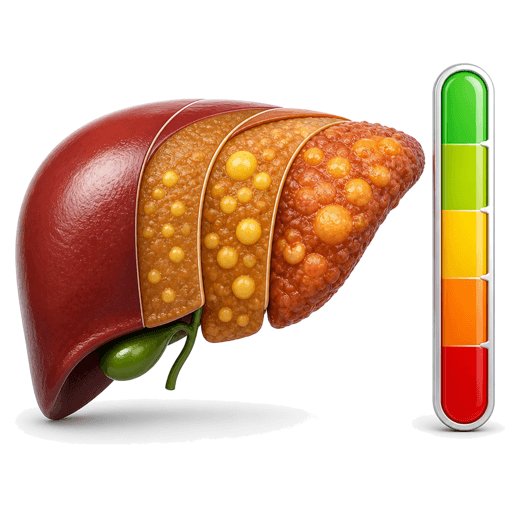
Fatty Liver Severity Calculator
Calculate the Hepatic Steatosis Index (HSI) from ALT, AST, BMI, sex and diabetes status. Screen for fatty liver steatosis severity in NAFLD/MASLD with validated cutoffs and PDF export.

Metabolic Syndrome Risk Calculator
Screen metabolic syndrome with all 5 harmonized criteria—waist, triglycerides, HDL, blood pressure and fasting glucose. Asian waist cutoffs, diet tips, exercise guidance and lab recommendations.
Insulin Resistance (HOMA-IR) Calculator
Calculate HOMA-IR from fasting glucose and fasting insulin to estimate insulin resistance. Get category, HOMA-β, and educational guidance for metabolic health.
HbA1c ↔ Average Blood Glucose Calculator
Convert HbA1c (%) to estimated average glucose (eAG) and back using the ADAG formula. ADA category bands, mg/dL and mmol/L units, PDF export.

Type 2 Diabetes Risk Assessment Calculator
Assess type 2 diabetes risk using the Indian Diabetes Risk Score (IDRS). Enter age, waist, family history, activity, and clinical history. Low to Very High risk with PDF export.
Triglyceride/HDL Ratio Calculator
Calculate triglyceride/HDL ratio from fasting lipids for cardiometabolic risk, insulin resistance screening, AHA lipid interpretation, and PDF export.
Calculator Categories
Explore more free tools by health topic. Your calculator's category is highlighted below.
Body Composition
16 calculators
Browse categoryNutrition & Metabolism
31 calculators
Browse categoryFitness & Cardio
13 calculators
Browse categorySleep & Circadian Health
6 calculators
Browse categoryAging & Longevity
6 calculators
Browse categoryHeart & Metabolic Health
23 calculators
Browse categoryMental Wellbeing
4 calculators
Browse categoryWomen's Health
10 calculators
Browse categoryEnvironment & Lifestyle
6 calculators
Browse category